
Virtual CFO support
Fractional CFO services for Australian startups.
CFO expertise, without the full-time hire.
Cash flow forecasting, board reporting and preparation for your next raise, from CFOs who've spent years working with startups.
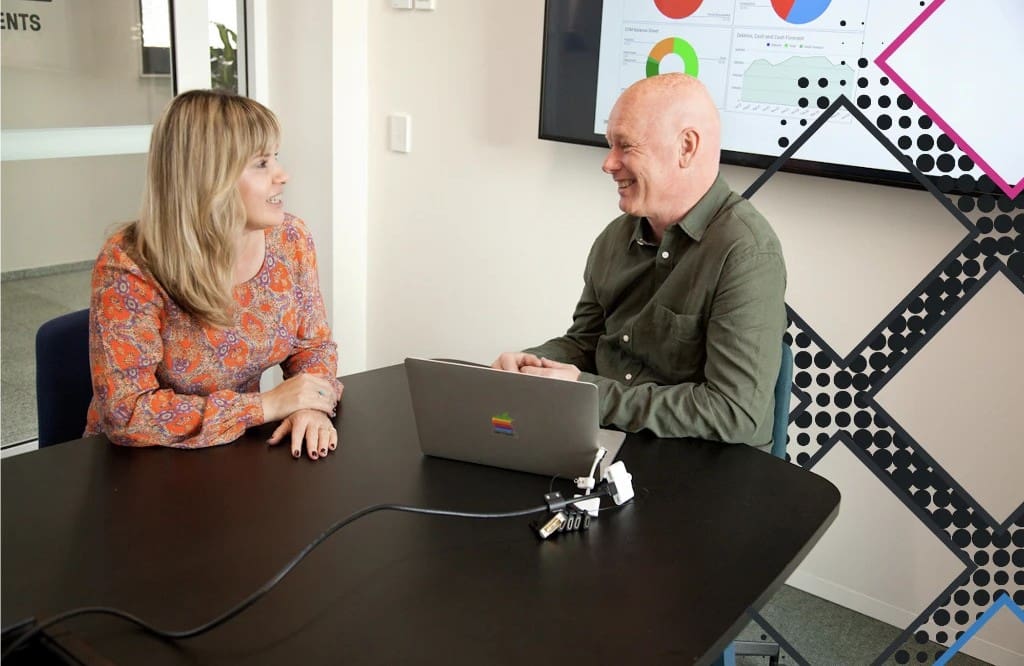
Your virtual CFO
CFO support for Australian founders who are raising, hiring and scaling.
A term sheet lands, the board wants a monthly pack and every new hire shortens your runway. You need a CFO, just not a full-time one yet.
Our fractional CFOs (also called virtual CFOs) work alongside you on the decisions that shape the business. Month to month, that means keeping your cash flow forecast up to date, turning your numbers into reporting you and your board can act on, and getting your finances ready for a raise. Looking further out, it means planning the next two or three years with you: how fast to grow, when to hire, where to spend and how you'll fund it. You get the experience of a senior CFO, for the hours you actually need.
What your CFO looks after
- ✓Seeing cash pressure coming early
- ✓Monthly numbers you can make decisions from
- ✓Keeping your forecasts current as plans change
- ✓Planning the next two or three years, not just the next quarter
- ✓Getting ready for your first or next raise
- ✓Reporting your board can rely on
- ✓A CFO on hand between your monthly meetings
Who we work with
From startup to scale-up.
Founders rarely come to us because they've reached a particular stage. They come because something has landed on their desk that needs senior finance experience. Here's what that tends to look like, from the first raise onwards.
Before the raise
You're getting ready to raise
Investors will want a forecast that holds up when they dig into it, and numbers that tie back to it. If your model lives in a spreadsheet only you can follow, now is the time to get it into shape.
After the raise
You've just closed a round
The money's in the bank, and with it comes a board to report to and a runway to look after. Reporting moves from occasional to monthly, and your investors will want to see where the money is going.
Growing
You're growing faster than your reporting
Revenue and headcount are both climbing, and you need to see which parts of the business make money and where the cash goes each month. Bigger decisions are waiting on those answers.
What's next
You're planning the next big move
A new market, a larger round or the first conversations about an exit. The scrutiny on your numbers goes up, and so does the number of people asking for them.
You don't need to call yourself a startup for this to apply. If one of these sounds like your week, tell us what's on your desk and we'll say whether CFO support is the right fit.

A CFO for the raise and the board table
"When founders are building a business, we need to focus on product and customers. Standard Ledger has helped me do that by taking other things - monthly Xero, BAS, bookkeeping, payroll - off my hands and by providing the financial expertise to take the weight off my shoulders. None of us have financial expertise. With Standard Ledger's CFO service, we can get that expertise without having to hire someone full time at this early stage. This has been a massive help, including now for the capital raise we're doing. We needed a good financial model, financial accountability and a CFO who can come to board meetings and talk about numbers."
Mandeep Sodhi
Founder & CEO, Effi
Bite-sized CFO support
From a few hours a month to two days a week.
Most growing businesses can't justify a full-time CFO. What they need is an experienced CFO's skills for long enough to do the job, with more time when the job gets bigger.
- 4 hours a month Getting ready for growth or a first raise
- 8 hours a month After a raise, with a board to report to
- Half a day a week or more VC-backed and scaling fast
- Up to two days a week About as far as fractional goes
- $201,600 - $336,000 a year In salary and super, before recruitment and on-costs
Skills you couldn't otherwise afford
Our CFOs have worked in venture capital, big accounting firms and inside startups. You get that experience from the first month, for a monthly fee.
Up and down with the business
Step up in the run-up to a raise and back down in a quieter quarter, with your package moving month to month as you need it.
We'll tell you when it's time to hire
Past about two days a week, a full-time CFO makes more sense and we'll say so. We've helped clients recruit their own, and we'll help you find the right person.
Full-time figure: salary range for CFOs in SMEs and privately owned businesses, Robert Walters Salary Survey 2026, which excludes super. Super added at the 12% Superannuation Guarantee rate.
Pricing
CFO packages for each stage of growth.
Each package is a fixed monthly fee for a set amount of CFO time, and every one includes a monthly meeting with your CFO.
Grow
- ✓Monthly P&L, accounts payable & receivable
- ✓Monthly performance review
- ✓Monthly reporting pack incl. forward cash flows
- ✓Monthly CFO meeting on forward cash flows
- ✓Updating of forecasts
- ✓Fortnightly check-in
- ✓4 hrs/month CFO support
Grow+
- ✓Monthly P&L, accounts payable & receivable
- ✓Monthly performance review
- ✓Monthly reporting pack incl. forward cash flows
- ✓Monthly CFO meeting on forward cash flows
- ✓Updating of forecasts
- ✓Weekly check-in
- ✓8 hrs/month CFO support
Partner
- ✓Everything in Grow+
- ✓Rolling 12-month cash flow forecast
- ✓Monthly analysis of actuals against budget for board reports
- ✓Key metric and KPI reporting
- ✓Min. half day/week with your team
Wherever possible, we provide a fixed-fee proposal upfront, so you know exactly what you're paying and what you're getting.
What founders say
Trusted by venture-track founders.
Founders on what CFO support has done for them, from raising capital and reporting to a board through to selling the business.
“Standard Ledger’s fractional CFO services identified KPIs driving operational improvements, making us an attractive acquisition target. Strategic exit planning structured our finances to maximise returns, and negotiating the complexities of the sale process secured us a deal that recognised our full value.”

Peter Neal
“The CFO service gives us expertise we can lean on. It’s been a massive help, including during capital raising when you need a really good financial model and a CFO who can come to board meetings and talk numbers.”
Mandeep Sodhi
“For me, having CFO support has been vital for everything from insurance documents to financial modelling, and strategic advice and guidance. Working with Remco and Mike has transformed my knowledge personally, and also enabled us to grow safely. We wouldn’t have been able to do it without them.”

Charlie Hamer
Client stories
What CFO support has changed for our clients.
Seven Australian businesses, from AI and fintech to health services and construction tech, each with a decision or a problem that needed senior finance experience. We've left the names out, and kept the numbers in.
A Brisbane education research company
From a cash squeeze over Christmas to a $1 million round
$1m
raised, with $800,000+ in the bank by mid-February
Read storyClose
A Brisbane education research company
From a cash squeeze over Christmas to a $1 million round
$1m
raised, with $800,000+ in the bank by mid-February
Where they were
Halfway through a raise from its existing shareholders, this Brisbane education research company found around $180,000 of client payments arriving late, just as it was going into the Christmas shutdown period. At the same time, the round's lead investors would only release their money once everyone else had paid in. By early January, cash would last a few weeks, with payroll due the next day and around $100,000 of bills waiting.
How we helped as their CFO
We'd already set the round up to move quickly, with a cap table showing each shareholder's share, an expression-of-interest template and a data room built from the latest board report. When cash ran short, we managed it day by day over the holidays, deciding which bills to pay as client money came in. We rebuilt the shareholder communications around the cash position, so shareholders understood why the money already received needed to be released early. Once the round closed, we set up even tighter ongoing cash controls: a separate account for the investment money, a minimum cash balance of $500,000, and a forecast built only on revenue that was actually contracted.
Where they got to
The round raised around $1 million. Within a fortnight, around $120,000 of overdue bills had been paid, and by mid-February the company had more than $800,000 in the bank to underpin its activities for the year ahead.
A Perth tech company with a UK subsidiary
From a budgeted $800,000 loss to an underlying profit, without raising money
$5m
revenue against a $4.6m budget, in profit most months
Read storyClose
A Perth tech company with a UK subsidiary
From a budgeted $800,000 loss to an underlying profit, without raising money
$5m
revenue against a $4.6m budget, in profit most months
Where they were
The founders of this Perth tech company started the year with a budgeted loss of nearly $800,000. They wanted to reach break-even without raising money, in a market where investors were cautious and expecting more than they used to.
How we helped as their CFO
We look after the numbers on both sides, in Australia and the UK, and, together with the founders, rebuilt the forecast every month, so they could see where the year was heading rather than waiting for the final numbers. We separated one-off costs from everyday running costs, so a single round of UK visa renewals wasn't mistaken for the business going backwards, and started showing the board how quickly cash was being spent each month. As the business moved some roles to contractors and took on more ongoing service contracts, we tracked what each change did to the year, and set out a further $80,000 of savings the founders could make if a raise ever called for it.
Where they got to
Revenue reached around $5 million, against a budget of $4.6 million, and the business was making a profit most months from November - against the $800,000 loss it had budgeted for.
Full credit goes to the founders for their consistently tight control of costs. It took away the pressure to raise outside funding, and the company is now planning to grow again within its own means.
A Melbourne construction tech company
From weeks of cash to a funded plan, borrowing rather than raising
1 week
from the board meeting to a signed directors' loan
Read storyClose
A Melbourne construction tech company
From weeks of cash to a funded plan, borrowing rather than raising
1 week
from the board meeting to a signed directors' loan
Where they were
Most of the big renewals at this Melbourne construction tech company, and its R&D refund, arrive in the second half of the year, so cash runs low in the first. By mid-2026 the forecast showed cash running out within weeks, and a large enterprise deal the forecast had been counting on wasn't yet signed. The board wanted to borrow to get through rather than raise.
How we helped as their CFO
We took the unsigned deal out of the forecast so the board could see the real position, and went to two specialist lenders so the board had a choice: a firm offer of $250,000, or a possible $400,000. The company took the $250,000, but it still wasn't enough to reach the R&D refund. So we priced a short-term loan from the directors to bridge the gap. The board was also weighing up cutting two roles. We modelled it and showed the saving would be much smaller than it looked, once the lost R&D refund and the leave payouts were counted. We then extended the forecast out to 2028, so the board had a plan for the next two years once it had got through the near-term shortfall.
Where they got to
The directors' loan was signed within a week of going to the board. The company's loss is also coming down, from $1.9 million the year before to an expected $800,000 this year, which the R&D refund largely covers.
A Sydney fintech company
From reporting that hid the profit to numbers ready for a sale
40%
steady margin on the core business, now clear to buyers
Read storyClose
A Sydney fintech company
From reporting that hid the profit to numbers ready for a sale
40%
steady margin on the core business, now clear to buyers
Where they were
Revenue at a Sydney fintech company grew by more than 80% in a year, and the company was getting ready to sell. It was spending heavily on growth, including a move into New Zealand, and its reporting mixed that spending in with the everyday cost of running the business. A buyer wouldn't have been able to see that the core business was profitable.
How we helped as their CFO
We split the company's costs into what it takes to run the business and what it spends to grow it, and added views of profit by department and by country, including a separate view of New Zealand to show what entering a new market costs and how quickly it pays back. We pulled out the margin on the core merchant business - a steady 40% - and set the forecast out as a cautious base plan with a separate plan for the larger deals in the pipeline, so buyers could see both without the forecast losing credibility. The sale itself is being run by specialist advisers, and our role is to give them numbers they can rely on.
Where they got to
The split showed that around $1 million of growth spending had added around $330,000 to profit the following year. The company is now going into a formal sale process with a Big Four adviser, with reporting that shows buyers what the business actually earns.
A Sydney software company
From a costly overseas hiring plan to a clear "not yet"
$2.6m
extra revenue a year the plan needed, known upfront
Read storyClose
A Sydney software company
From a costly overseas hiring plan to a clear "not yet"
$2.6m
extra revenue a year the plan needed, known upfront
Where they were
A Sydney software company had built a large development team overseas, all working as freelancers. As the team grew, that setup was getting harder to sustain, and the founders wanted to set up a company in that country to employ them directly - at the same time as doubling their marketing spend.
How we helped as their CFO
We modelled it before they committed. To keep the team's take-home pay the same, salary costs would rise by around 30%, and the business would need around $2.6 million of extra revenue a year just to keep its margins where they were - before the cost of local accountants, lawyers and administration. We also offered to find a mid-sized firm with local experience to advise on the setup, rather than a far more expensive and slower Big Four engagement.
Where they got to
The plan is on hold while the founders look at cheaper ways to employ the team, and they know the revenue they would need before committing.
A Melbourne AI company
From losing its biggest customer to a plan for the cash gap
6 weeks
to a cash gap, spotted while there was time to act
Read storyClose
A Melbourne AI company
From losing its biggest customer to a plan for the cash gap
6 weeks
to a cash gap, spotted while there was time to act
Where they were
Around three-quarters of a Melbourne AI company's revenue came from one customer. The business was profitable, but it ran on very little cash, so when that customer ran into serious financial trouble and the work stopped, around $200,000 of contracted revenue for the rest of the year was suddenly at risk.
How we helped as their CFO
When the customer started cutting back on its other suppliers, we worked through with the founder what losing it would mean: a cash gap within about six weeks. With that number in hand, the founder brought forward contracted work from later in the year to help cover it. We then rebuilt the financial model to split costs into what it takes to keep the business running and what could be paused until new revenue came in, so the founder could see exactly which bills had to be paid. We built the cash forecast around the new customers in the pipeline, and we're supporting the company as it explores selling an earlier version of its technology to an overseas buyer, which would bring in a large one-off payment.
Where they got to
The founder knows exactly how much cash the business needs each month and where it will come from, and is working towards a wider spread of customers so one contract can't put the business at risk again.
A Sydney health services business
From a risky sale offer to a share sale that avoided around $1 million in tax
$1m
in extra tax avoided by keeping it a share sale
Read storyClose
A Sydney health services business
From a risky sale offer to a share sale that avoided around $1 million in tax
$1m
in extra tax avoided by keeping it a share sale
Where they were
The Sydney founders behind two health services businesses decided to sell one of them. The first offer looked straightforward, but it meant handing over the business's profits every month until the sale completed, while the buyer could still walk away late in the process. If it fell through, the founders could have been left without the profits, the staff or the customers.
How we helped as their CFO
We set the first offer against a second one, so the founders could see what each was really worth and what each put at risk. We rebuilt the forecast, which had been based on a capital raise that was no longer happening, and reviewed the accounts before the buyer's checks began. Late in the process, the buyer asked to switch from buying the company's shares to buying its assets instead. We worked out that the change would cost the founders around $1 million in extra tax and helped them push back. We're now modelling the wind-down month by month as customers move across to the buyer, so the company stays solvent and the founders are paid out.
Where they got to
The sale was agreed as a share sale, avoiding around $1 million in extra tax.
One-off projects
CFO support for a single piece of work.
Not everyone needs a monthly package. Sometimes there's one job in front of you, usually a raise, and you need a CFO for that. We'll agree the scope and cost with you before we start.
Reporting systems
Reporting set up around the numbers you actually run the business on, so it keeps working long after the project ends.
Pitch deck financials
The financials in your deck, your forecast and the story you tell about them, lined up before investors see them.
Financial modellingValuations
A valuation for an early-stage raise, with the method written down so you can explain how you reached the number.
ValuationsCap tables
A clear record of who owns what today, and what the next round does to everyone's share. If your investors are relying on the ESIC tax break, we'll check you qualify as an early stage innovation company before the shares go out.
Cap table managementFinancial memorandums
The detailed financial document that goes to investors or buyers, prepared from scratch or reviewed so it reads clearly and stands up to questions.
Due diligence prep
Your numbers and supporting documents in order before investors or buyers ask for them, with us on hand to answer their questions as they come in.
When you're selling or merging, we act as your CFO through the process, so your corporate advisors and the other side get accurate figures when they ask for them.
We also work with businesses looking to make an acquisition, and venture capital firms carrying out due diligence on a company they're looking to invest in.
CFO models compared
Not every business needs the same kind of CFO.
Fractional, virtual, interim, outsourced, financial controller - the names get used loosely, and they don't all mean the same thing. Here's how they differ on time, cost and who they suit, so you can see which fits where you are now.
| Model | What it is | Time | How you pay | Best for |
|---|---|---|---|---|
| Fractional CFO What we do | An experienced CFO working with you for part of the week or month, on the strategy and the hands-on work alike. | A few hours a month, up to about two days a week. Ongoing. | A monthly fee for the time you need. | Startups and scale-ups that need senior finance judgement but not a full-time hire. |
| Virtual CFO What we do | Usually the same service as fractional, with the emphasis on the work being done remotely. The more common term in Australia. | As fractional. | As fractional. | As fractional - the difference is mostly in the name. |
| Interim CFO | A CFO who steps in full-time for a fixed period, to cover a gap or lead one specific piece of work. | Full-time, for a set number of months. | A day or monthly rate for the term. | Covering a departure or leave, or a restructure that needs someone in the seat every day. |
| Outsourced CFO | An external firm taking on the CFO role, often packaged with bookkeeping and accounts. The term overlaps heavily with fractional. | Varies by provider. | Usually a monthly fee. | Businesses that want finance leadership and the day-to-day accounting from one provider. |
| Financial controller | Runs the finance function day to day: month-end close, controls and accurate reporting. The focus is on getting the numbers right rather than planning what comes next. | Part-time or full-time. Ongoing. | A salary, or a monthly fee if outsourced. | Businesses where the volume of transactions and reporting needs dedicated management. |
| Full-time CFO | A permanent member of your leadership team, running finance across the whole business. | Five days a week. Ongoing. | Salary, super and on-costs. | Businesses that need CFO time for more than two days a week. |
We also provide bookkeeping and accounting alongside CFO support, so if you want the outsourced model, with everything under one roof, we can cover that too.
Which one fits comes down to how much CFO time you need, and for how long. Not sure which side of the line you're on? That's a good first conversation to have with us.
Our team
Meet your fractional CFO team.
The people who'll work on your numbers, from your CFO to the analysts behind the reporting.

Remco
Co-founder + CFO
Remco has worked with startups and fast-growing SMEs as a CFO for about 15 years, following four years in venture capital and 10 years in multinational consulting/services firms. He’s also our co-founder and CEO, so he knows a thing or two about running a business.

Michael
Co-founder + CFO
Mike is a uniquely skilled CFO with experience in big accounting firms and startups. His knowledge of tax structuring and financial modelling helps our startup clients expand and he has supported many through capital raising. He’s also our co-founder, along with Remco.

Anne
Senior Analyst
As an experienced financial modeller and team lead, Anne works with our clients to build financial forecasts that provide clear operational visibility and key insights. If there’s something specific you need to know about your finances, Anne is your person.

Caicy
Team Lead
Caicy is an integral part of our team, supporting our bookkeeping, tax, accounting and CFO services. She works with our accounting clients, and leads our back-office support team to run smoother than a warm knife through butter.

Kirsten
Financial Analyst
Kirsten is a financial all-rounder with experience in audit and capital markets and a passion for using numbers to drive growth and shake up the status quo. That’s why she joined our team and why she’ll be an asset to yours.
FAQ
Questions founders ask us.
These are the things founders most often want to know before working with us. If your question isn't here, bring it along when you speak with us.
What does a fractional CFO do that a bookkeeper doesn't?
A bookkeeper records what’s already happened, keeping your transactions, payables and receivables up to date. A fractional CFO’s job is to use those numbers to look ahead. Their responsibilities include financial planning and forecasting, managing your cash flow and runway, setting the KPIs you track, putting reporting systems in place, and looking after your relationships with investors, your board and lenders, including coming to your board meetings. They’re also the person you take the big decisions to, from when to hire to when to raise. You need both, and we can provide both, with a monthly meeting with your CFO and regular check-ins in between.
What's the difference between a fractional and a virtual CFO?
In Australia, the two terms usually mean the same thing: an experienced CFO who works with your business for part of the week or month. “Virtual” emphasises that the work is done remotely, while “fractional” emphasises that you’re buying part of a CFO’s time – you’ll sometimes see it called a part-time CFO too. Either way, it’s what our CFO packages deliver, so use whichever name you’re used to.
When is the right time to bring in a CFO?
Usually it’s when a decision is waiting on numbers you don’t have yet. That might be an upcoming raise, a board that now wants monthly reporting, or growth your spreadsheets can no longer keep up with. If any of those sound familiar, it’s worth a conversation, even if you’re not sure you’re ready. We’ll tell you if it’s too early.
How do I choose the right fractional CFO?
Look for someone who has already done the work you need next, whether that’s a raise, board reporting or getting ready for a sale, and who has done it for businesses at your stage. Ask about their background and qualifications too – our CFOs have worked in venture capital, big accounting firms and inside startups, so they know what investors and boards will ask for. Fit matters as much as experience, because you’ll be working closely with your CFO every month. That’s why your first conversation with us is free, so you can meet a CFO and decide whether we’re the right fit before you commit to anything.
How much does fractional CFO support cost?
It depends on how much CFO time you need, and our three packages are set out in the pricing section above. Each one is a monthly fee, and you can move between them as your needs change, with no lock-ins. For one-off work like a raise, we’ll give you a fixed-fee proposal upfront wherever we can, so you know what you’re paying before anything starts.
Do you look after tax and compliance too?
Yes. Alongside CFO support, Standard Ledger provides tax, bookkeeping and payroll services, as well as help with the R&D tax incentive and government grants. Your tax, BAS, payroll and claims can all sit with the same team that looks after your forecasts, so nothing falls between two providers. We’ll set out what’s covered and what it costs before any work begins.
Next step
Talk to a CFO about where you are now.
Whether you're getting ready to raise, reporting to a new board or planning what comes next, we'll tell you how much CFO support makes sense and what it would involve.
Fixed fee, no lock-in.